Training Diplomats for a Complex World: The Institute of Public Policy and Diplomacy Research Model
April 1, 2026IPPDR/MEDIA
Abstract
Diplomatic practice continues to evolve as geopolitical tensions, transnational security threats, and complex governance challenges reshape international relations.
Preparing practitioners capable of navigating these realities requires competency training models that move beyond theoretical instruction toward applied diplomatic practice.
This article examines the International Peace Practitioner and Global Peace Ambassador Training organized by the Institute of Public Policy and Diplomacy Research (IPPDR) in New York.
The program brought together professionals from Africa, the Caribbean, Europe, and the Americas to engage in negotiation simulations, policy discussions, and security analysis. Participants examined diplomacy as a strategic instrument of statecraft, explored the role of human security in global governance, and participated in geopolitical simulations related to energy security and regional stability.
The training also aligned with the policy discussions of the Commission on the Status of Women, emphasizing inclusive leadership and expanded participation in diplomacy. The findings suggest that experiential diplomatic training contributes to strengthening negotiation capacity, policy literacy, and international cooperation among emerging leaders.
Introduction
Diplomacy operates within an increasingly complex global environment shaped by geopolitical competition, economic interdependence, technological disruption, and security challenges that cross national borders. Governments, international organizations, and civil society institutions require professionals who can navigate these pressures while advancing policies that support stability and cooperation.
Traditional diplomatic education often emphasizes theory, historical case studies, and institutional procedures. Modern international affairs demand an additional layer of preparation that includes negotiation practice, geopolitical analysis, and exposure to real world policy scenarios.
The Institute of Public Policy and Diplomacy Research (IPPDR) has developed training programs designed to strengthen this capacity. From March 17 to 19, the Institute convened its International Peace Practitioner and Global Peace Ambassador Training in New York, bringing together professionals from multiple regions to examine contemporary diplomacy through applied learning and strategic dialogue.
Diplomacy as Strategic Influence
The training was led by H.E. Ambassador Dr. Andrise Bass, Founder and Executive Director of the Institute of Public Policy and Diplomacy Research. Participants explored diplomacy as a strategic instrument that shapes international outcomes through negotiation, policy communication, and institutional engagement.
Discussions examined how states project influence, defend national interests, and communicate policy positions within international forums. Participants also explored how narratives, alliances, economic leverage, and credibility affect negotiation outcomes.
Understanding these dynamics allows practitioners to interpret diplomatic interactions beyond formal meetings. Diplomatic influence often develops through informal dialogue, coalition building, and strategic messaging that shape international perceptions.
For participants from regions where diplomatic representation has historically been limited within global decision making spaces, strengthening this strategic awareness supports more effective engagement in international governance.
Human Security and Transnational Challenges
Security discussions during the program extended beyond traditional interstate conflict. Modern diplomacy increasingly addresses transnational challenges that affect social stability and economic development.
A session led by Richard Stephien, Supervisory Special Agent with Homeland Security Investigations, focused on human trafficking and the complex networks that enable exploitation across borders. Participants examined how trafficking systems operate through migration vulnerabilities, financial channels, and organized criminal structures.
Policy responses to such challenges require cooperation among governments, law enforcement agencies, and international institutions. Diplomatic channels often facilitate these collaborations, supporting the development of legal frameworks, information sharing mechanisms, and coordinated prevention strategies.
Alignment With Global Governance Dialogue
The training coincided with the international policy discussions of the Commission on the Status of Women. These discussions focused on strengthening justice systems and expanding opportunities for women and girls in governance and decision-making.
Within this context, participants examined how inclusive leadership contributes to stronger policy outcomes and institutional resilience. Discussions highlighted the importance of expanding participation in diplomacy to include women, youth, and leaders from diverse regions.
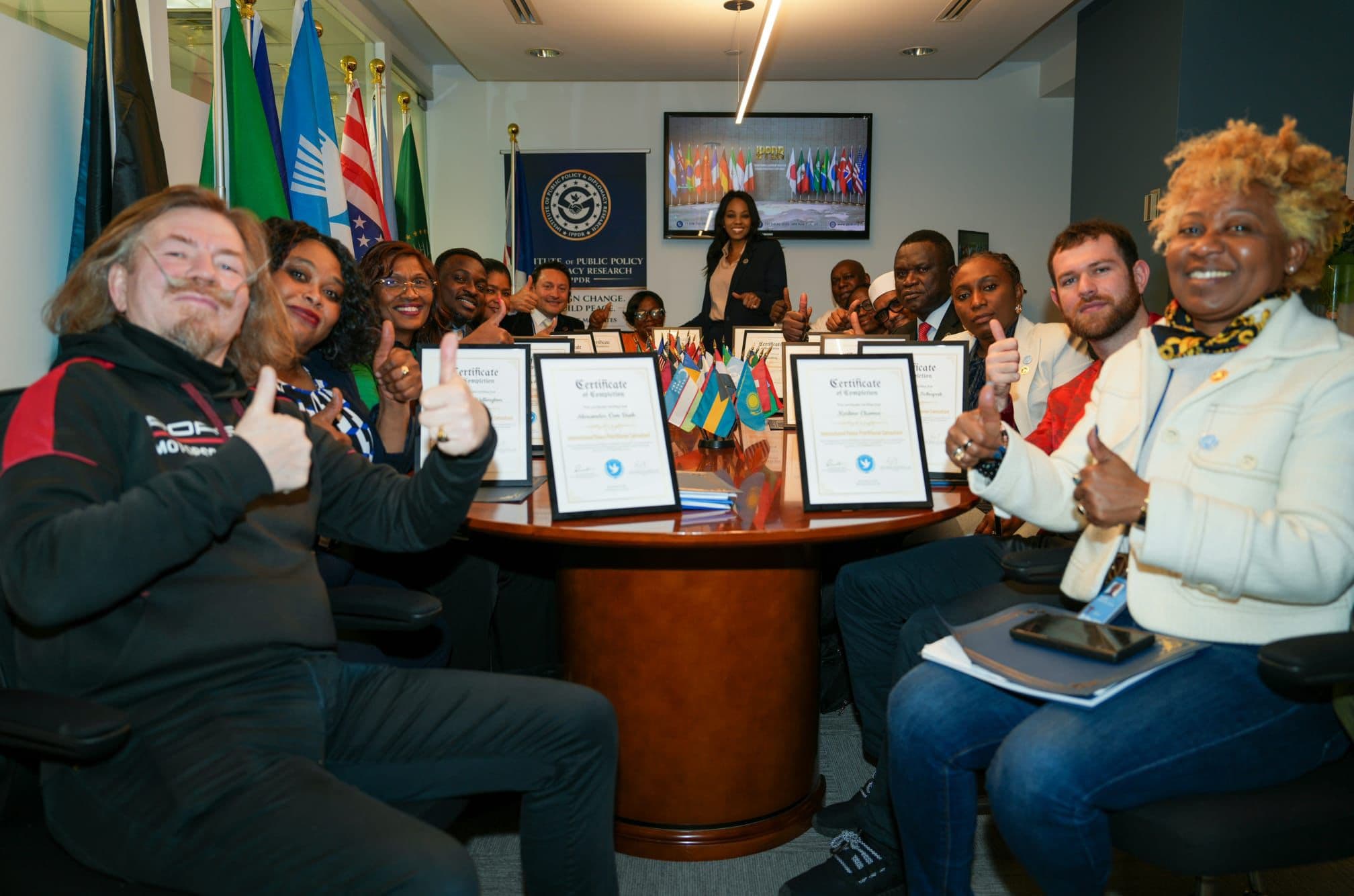
Following the completion of the training sessions, participants attended a diplomatic reception and certification ceremony held at the Delegates Dining Room of United Nations Headquarters. The gathering brought together participants, diplomats, and international practitioners to recognize the graduates while strengthening professional networks that support continued collaboration.
Negotiation Under Geopolitical Pressure
The final phase of the program involved a geopolitical simulation designed to replicate the pressures of diplomatic crisis management. Participants engaged in negotiations related to tensions surrounding the Strait of Hormuz, a maritime corridor that plays a central role in global energy supply.
Participants assumed diplomatic roles representing different national interests. Negotiations addressed maritime security, sanctions policy, economic stability, and regional security dynamics.
Simulations of this nature allow practitioners to experience the complexity of international negotiations. Decisions rarely involve simple solutions. Negotiators must balance domestic political pressures, international expectations, and economic consequences while working toward cooperative outcomes.
This exercise demonstrated how negotiation skills, strategic thinking, and disciplined communication influence diplomatic success.
International Participation and Regional Perspectives
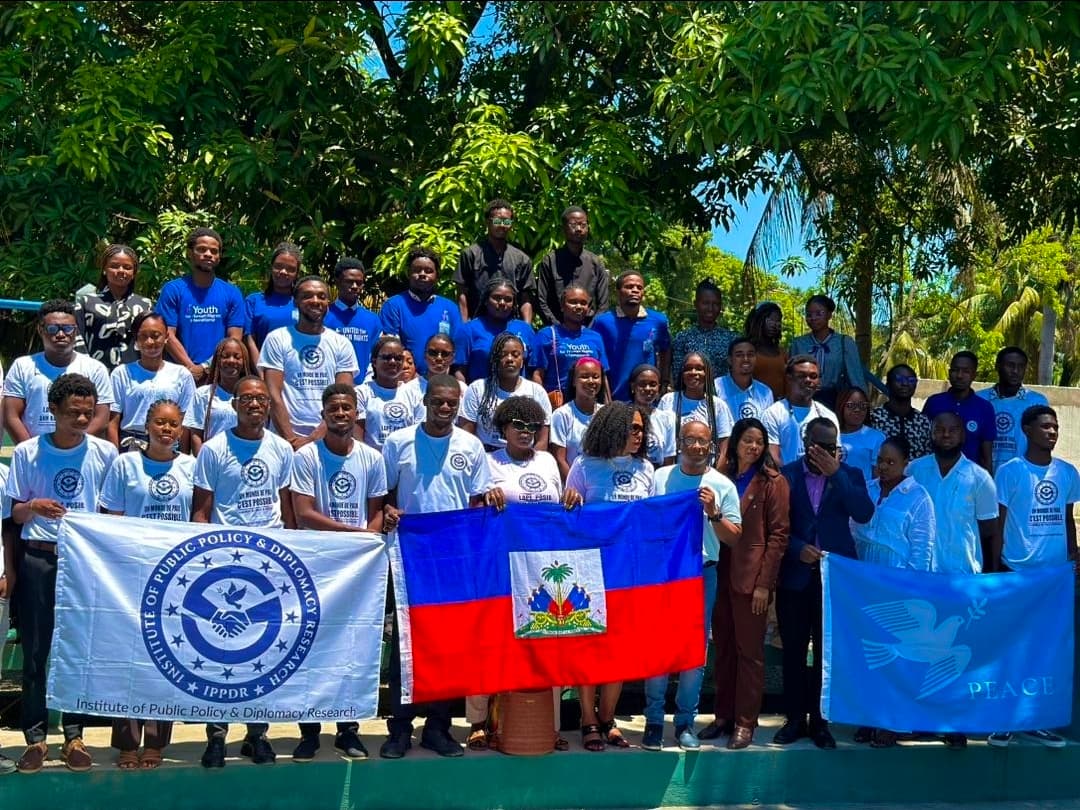
The training brought together professionals representing a broad range of geographic and professional backgrounds. Participants included representatives from Senegal, Ghana, Côte d’Ivoire, Benin, Chad, Ukraine, Jamaica, Trinidad and Tobago, Haiti, Argentina, Russia, and the United States.
African participation reflected the continent’s growing role in global political and economic discussions. Governments, civil society institutions, and regional organizations across Africa continue to expand their engagement in diplomacy, security cooperation, and development policy.
Participants from the Caribbean and Eastern Europe contributed perspectives shaped by regional experiences with economic development, security challenges, and international cooperation.
Interactions among participants from different regions provided opportunities for dialogue, comparative analysis, and the development of professional relationships that support future collaboration.
From Conflict Prevention to Sustainable Peace
Participants explored the distinction between negative peace and positive peace within peacebuilding frameworks. Negative peace refers to the absence of direct violence. Positive peace reflects the presence of institutions capable of delivering justice, inclusion, and accountable governance.
Strengthening these institutions reduces the likelihood of conflict and contributes to long term stability. Diplomatic practitioners therefore benefit from understanding how governance systems, economic conditions, and social inclusion influence peacebuilding outcomes.
The training encouraged participants to analyze structural challenges within governance systems and consider policy approaches that address underlying causes of instability.
Youth Leadership and the Future of Diplomacy
Youth participation in governance continues to receive increasing attention within international peace and security frameworks. Regions with rapidly expanding youth populations require leadership development strategies that equip emerging professionals with policy knowledge and diplomatic skills.
Programs such as the International Peace Practitioner training contribute to this effort by providing opportunities for younger professionals to engage in diplomatic dialogue, negotiation simulations, and policy analysis.
Developing these capacities strengthens the foundation for future leadership within governments, civil society institutions, and international organizations.
Policy Implications
Diplomatic leadership requires preparation that integrates theoretical knowledge with practical experience. Simulation based training allows practitioners to develop negotiation skills and strategic awareness within environments that mirror real international tensions.
Human security challenges demand coordinated responses that involve diplomacy, law enforcement cooperation, and institutional reform.
Expanding access to diplomatic training programs supports broader regional participation in global governance discussions.
Negotiation capacity represents a strategic asset for governments and institutions seeking to manage disputes through dialogue rather than confrontation.
Leadership development initiatives that include youth and women strengthen the resilience and legitimacy of governance systems.
Key Takeaways for Policymakers
Practical diplomatic training strengthens leadership capacity.
Simulation based programs expose participants to negotiation pressures and geopolitical dynamics that cannot be fully understood through theory alone.
Human security issues require coordinated diplomatic engagement.
Challenges such as human trafficking demand cooperation between governments, international institutions, and law enforcement agencies.
Regional participation enhances global governance.
Strengthening representation from Africa, the Caribbean, and emerging regions contributes to more balanced international dialogue.
Negotiation skills support conflict prevention.
Professionals trained in negotiation frameworks can contribute to diplomatic engagement that reduces escalation during international disputes.
Youth leadership development supports long term stability.
Equipping emerging leaders with diplomatic and policy skills strengthens institutions and governance systems.
Author Note
H.E. Ambassador Dr. Andrise Bass, PhD, EdD is a diplomatic strategist, peacebuilding specialist, and Founder and Executive Director of the Institute of Public Policy and Diplomacy Research (IPPDR), an international institution based in New York dedicated to leadership training in diplomacy, peacebuilding, governance, and international affairs.
Dr. Bass has worked globally in the fields of human rights, conflict resolution, and public policy, mentoring emerging leaders and advising institutions on negotiation, governance, and international cooperation. Her work focuses on strengthening diplomatic capacity, promoting sustainable peace frameworks, and preparing the next generation of practitioners to navigate complex geopolitical environments.