The Heart of Haiti’s Youth: A Nation Ready for Peacebuilding Capacity
April 13, 2026IPPDR/MEDIA
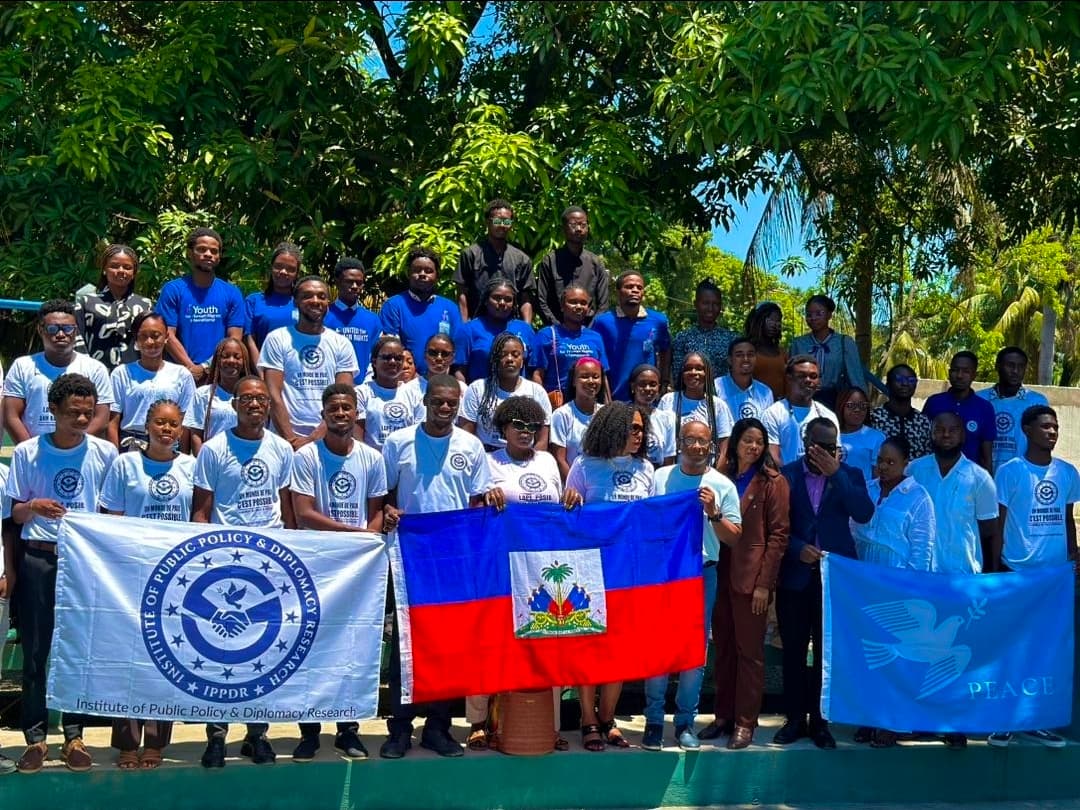
The Sommet de la Jeunesse pour la Paix – Édition Haïti 2026 has now concluded, yet its impact continues to resonate far beyond the walls of the Université Publique du Nord au Cap-Haïtien (UPNCH). What emerged from this gathering was not only dialogue, but a powerful and undeniable truth: the youth of Haiti are ready, committed, and deeply hungry for peace.
This was not a symbolic gathering. It was a moment of awakening.
A Generation That Refuses Instability
Throughout the summit, one message was consistently expressed by participants from diverse backgrounds: Haitian youth are no longer willing to inherit instability without being part of the solution. Their voices reflected clarity, urgency, and a profound sense of responsibility toward their country.
They did not come to observe. They came to learn, to engage, and to lead.
The energy in Cap-Haïtien revealed a generation that understands that peace is not given. It is built. And they are prepared to build it.
A Thirst for Knowledge and Capacity
One of the most striking outcomes of the summit was the level of engagement in training sessions. Participants demonstrated a strong desire to understand:
The root causes of conflict in Haiti
The role of governance and public policy in stability
Practical methods of mediation and conflict resolution
The structure and function of diplomacy at national and international levels
This was not passive participation. It was active absorption. Youth asked critical questions, challenged ideas, and sought practical tools they could take back to their communities.
Their thirst is not theoretical. It is operational.
They want to be trained. They want to be equipped. They want to act.
From Emotion to Structure
The emotional commitment of the youth was evident, but what distinguished this summit was the transition from passion to structure. Through the leadership of the Institute of Public Policy & Diplomacy Research (IPPDR), participants were guided to translate their commitment into actionable frameworks.
They began to see peace not only as a moral objective, but as a discipline requiring:
Strategy
Coordination
Institutional understanding
Long term planning
This shift is critical. It marks the difference between aspiration and implementation.
A National Resource in the Making
Haiti’s youth represent one of its most valuable and underutilized resources. The summit demonstrated that when given access to the right training and environment, young people can become catalysts for stability, dialogue, and reform.
They are ready to:
Lead community based peace initiatives
Facilitate dialogue across divides
Engage in policy discussions
Support governance at local and national levels
What they require now is continuity. Training must not stop here.
The Responsibility Moving Forward
The conclusion of the summit is not the end of the work. It is the beginning of a greater responsibility.
Institutions, partners, and leaders must recognize what was clearly demonstrated in Cap-Haïtien: the youth of Haiti are not disengaged. They are waiting for structure, mentorship, and opportunity.
They are ready to be trained at a higher level.
They are ready to be entrusted with responsibility.
They are ready to contribute to national transformation.
A Clear Message from Cap-Haïtien
The message that emerged is both simple and powerful:
Haiti’s youth are committed to peace.
They are prepared to lead.
And they are asking, with urgency and clarity, for the tools to do so.
The role of the Institute of Public Policy & Diplomacy Research (IPPDR) remains clear. To continue building capacity. To continue providing structured training. To continue transforming willingness into leadership.
Because in Haiti today, peace is no longer just a vision.
It is a demand driven by a generation that refuses to wait.