Human Trafficking Awareness Day
January 11, 2025IPPDR/MEDIA
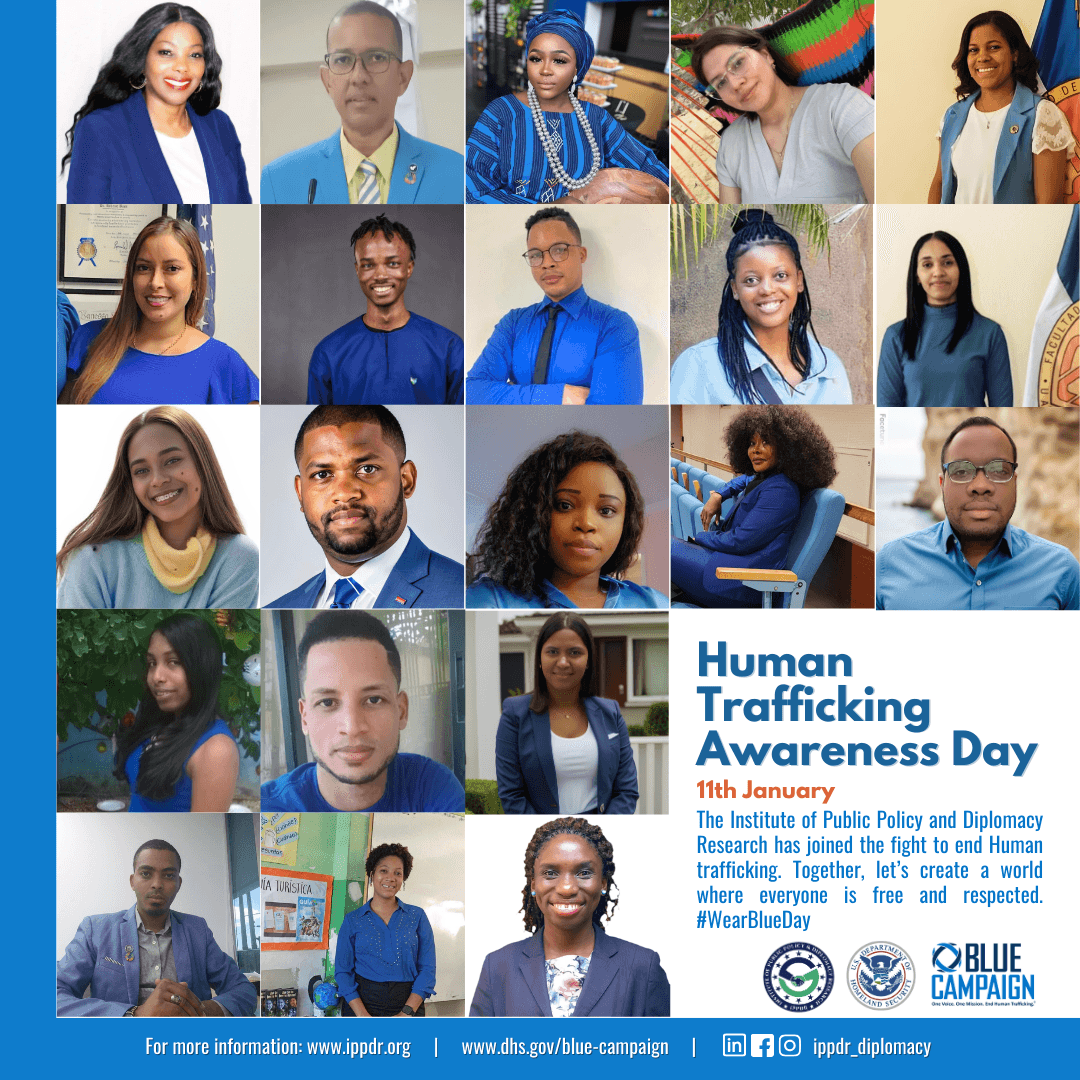
The Institute of Public Policy and Diplomacy Research (IPPDR) reaffirms its commitment to the Blue Campaign as part of its mission to address human rights violations. The Institute aims to educate, advocate, and take meaningful steps toward ending this crime by integrating anti-trafficking efforts into its human rights training assessments.
Understanding the Scope of Human Trafficking
A Global Crisis
Human trafficking is a $150 billion criminal industry that affects an estimated 27.6 million people globally, according to the International Labour Organization (ILO). Women and girls account for a staggering 71% of victims, and children are frequently forced into labor, sexual exploitation, or even used as child soldiers.
The U.S. Context
In the United States, the National Human Trafficking Hotline documented over 16,600 cases in 2022, impacting nearly 25,000 victims. The majority of these cases involved sex trafficking, but labor trafficking remains prevalent in industries such as agriculture, domestic work, and hospitality. Traffickers exploit systemic vulnerabilities, including poverty, immigration status, and lack of access to resources.
Human Trafficking as a Human Rights Violation
Human trafficking undermines fundamental human rights:
Freedom: Trafficking enslaves individuals, stripping them of autonomy and control over their lives.
Safety and Security: Victims endure physical, emotional, and psychological abuse, often with no means of escape.
Fair Work and Wages: Forced labor denies individuals the right to just compensation and humane working conditions.
Despite global recognition of trafficking as a human rights crisis, systemic inequalities, corruption, and limited awareness perpetuate the problem.
The Role of Awareness and Prevention
Recognizing the Signs
Combating trafficking begins with vigilance. Key indicators include:
Restricted movement or controlled communication.
Signs of physical abuse, malnourishment, or neglect.
A lack of personal identification or documentation.
An individual being closely monitored or controlled by another person.
Practical Steps for Safety
Education: Understanding trafficking tactics is essential to recognizing risks.
Online Safety: Social media platforms are often exploited by traffickers. Avoid sharing personal information with strangers.
Travel Precautions: Inform trusted individuals about travel plans and maintain communication.
Empowering Youth: Teach children about personal safety and the relevance of reporting suspicious behavior.
Reporting Suspicious Activity
If you suspect trafficking, act immediately: Call 1-888-373-7888 or text HELP or INFO to BeFree (233733) to report suspected human trafficking to the National Human Trafficking Hotline (NHTH), which takes calls from victims and survivors of human trafficking and those who may know them.
Call 1-866-347-2423 to report suspected human trafficking to the Homeland Security Investigations (HSI) Tip Line 24 hours a day, 7 days a week, every day of the year.
Call 1-800-THE-LOST (1-800-843-5678) or go to CyberTipline.org to report suspected child sex trafficking, sextortion, online enticement, and sexual abuse material to the National Center for Missing and Exploited Children (NCMEC). In emergencies, call 911 to report immediate danger.
The Blue Campaign and IPPDR’s Pledge
The Blue Campaign, led by the U.S. Department of Homeland Security, is a vital initiative that raises awareness and equips communities to combat human trafficking. We are proud to align our human rights training assessments with the goals of the Blue Campaign. This partnership underscores our commitment to:
Education: Delivering comprehensive training to identify and prevent trafficking.
Advocacy: Amplifying the voices of survivors and raising public awareness.
Collaboration: Partnering with law enforcement, nonprofits, and international organizations to strengthen anti-trafficking measures.
A Call to Action
Human trafficking is not an isolated issue; it is a global crisis that affects every community. We urge individuals, organizations, and governments to join the fight against trafficking. By supporting initiatives like the Blue Campaign, recognizing the signs of trafficking, and taking proactive steps to protect vulnerable populations, we can collectively work to end this atrocity.
Together, we can uphold the principles of human rights, ensuring freedom, safety, and dignity for all.
The Fifth United Nations World Data Forum in Medellín, Colombia, which spanned 4 days (November 12th – 15th 2024), brought together more than 3,000 global leaders, youth, experts and dedicated people to share, find, co-create, and edify solutions to challenges faced in their communities through effective use of data.
This was highlighted by the intensive and enriching discussions, where ideas were generated to strengthen the data ecosystem, harness the power of data for a more sustainable future whilst building and maintaining strong and healthy partnerships in the formal, informal sectors and civil society.
The event featured 4 high-level plenary sessions focusing on various aspects of data usage and ethics.
Plenary 1 discussed innovation in data integration and leveraging different sources and methodologies to ensure visibility and inclusivity. Plenary 2 emphasized maximizing data value for decision-making and bettering lives through analysis and communication.
Plenary 3 centered on building trust and ethics in data use, addressing issues like disinformation and cybersecurity. Plenary 4 highlighted the importance of effective partnerships in developing a more equitable data ecosystem, supporting global and local data initiatives.
The sessions stressed the significance of quality data, privacy protection, and ethical considerations in data sharing. Overall, the event aimed to promote responsible and inclusive data practices for the benefit of individuals, nations and organizations at all levels.